
Dementia Care Insights

Creating Supportive Environments isn’t just about Design. It’s Helping People with Dementia Thrive
02/24/26
Dealing with distress behaviors can be one of the most challenging parts of providing dementia care. When standard techniques don't seem to work, what creative strategies can you use to connect with and calm someone in distress?

Have You Ever Worked with an Individual When It's Hard to Determine if They Mean Yes or No?
11/12/25
We often default to asking simple "yes or no" questions in conversation: "Do you want to eat now?" "Are you ready to walk?" However, for someone living with dementia, these seemingly easy questions can be sources of immense stress and confusion, often leading to refusal or agitation.

Are You Struggling with Individuals Who Have Distress Behaviors During Mealtime?
09/30/25
Mealtimes are meant to be pleasant, but when distress behaviors or refusal occur, they can become a source of immense stress for both the individual and the caregiver. If you're frequently asking, "Are You Struggling with Individuals Who Have Distress Behaviors During Mealtime?", this video is for you.

Working with an Individual Living with Dementia Who is Resistant to Care?
09/16/25
Resistance to care is one of the most stressful and physically challenging aspects of dementia caregiving. Whether it’s refusal during dressing, bathing, or medication time, these moments can leave both the individual and the caregiver feeling frustrated and upset.

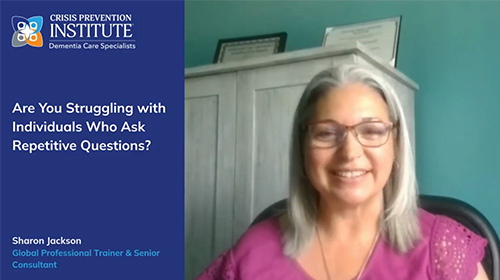
Are you Struggling with Individuals Who Ask Repetitive Questions?
08/26/25
Dealing with repetitive questions in dementia care is one of the most common and challenging experiences for healthcare professionals. If you're struggling with individuals constantly asking the same question (like "Where is my car?"). This video offers a simple yet transformative strategy to reduce distress and anxiety.

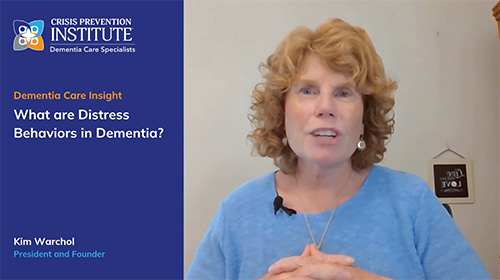
What are Distress Behaviors in Dementia?
08/07/25
When an individual living with dementia acts out, becomes agitated, or resists care, these actions are often labeled as "challenging behaviors." But at their core, these are distress behaviors—a way of communicating an unmet need, discomfort, or confusion.

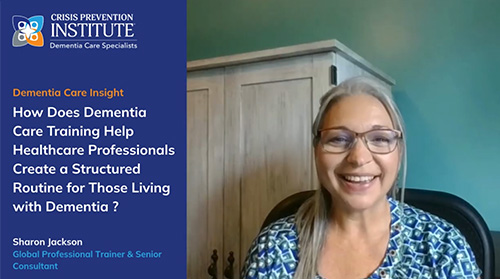
How does Dementia Care Training help Healthcare Professionals create a Structured Routine?
07/23/25
For individuals living with dementia, a predictable and well-structured routine is not a luxury - it's a critical tool for reducing anxiety and promoting stability. But how can healthcare professionals consistently create and implement routines that truly work?